works
Selected works
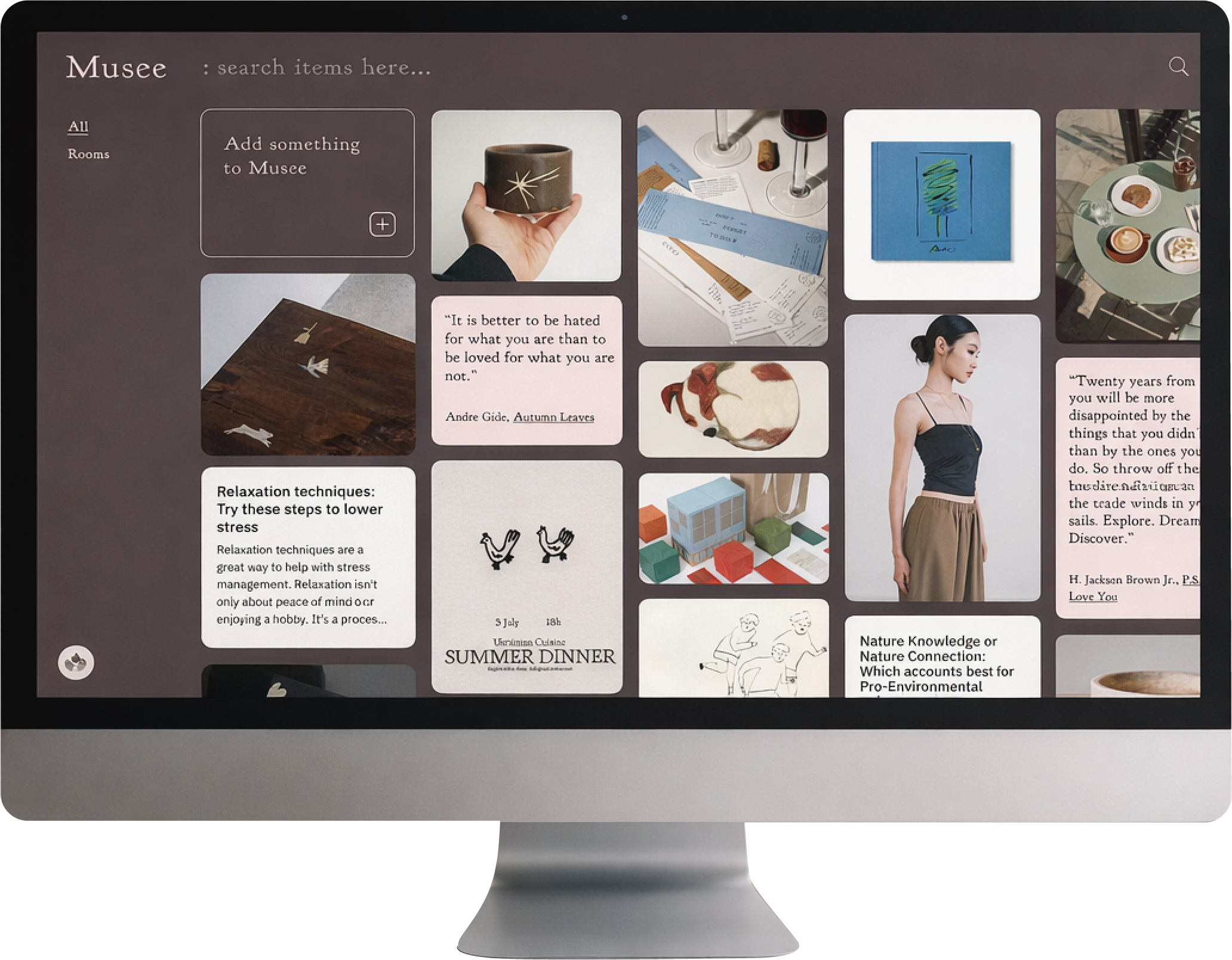
Musee
Common Café
Visual works
Gong Xu Design
GP Project 2050
hello-penny.com

Common Café
An online shared workspace designed around rhythm, focus, and rest.
Low-pressure participation
Focus-first
Shared Pomodoro
0 → 1
human-centric
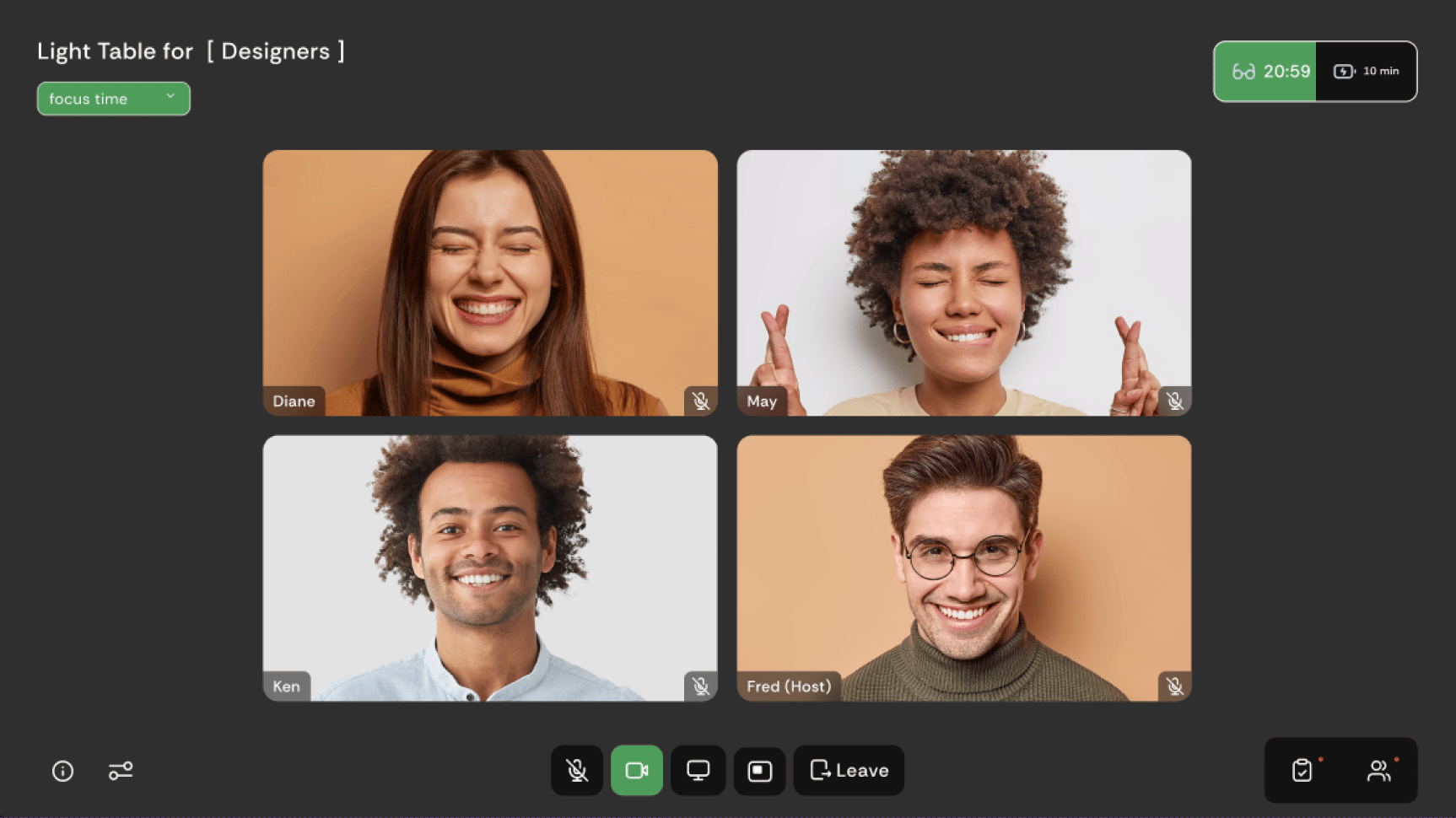
Common Cafe: An Online Shared Space for Focus and Gentle Accountability
A calm, time-structured coworking space where people focus together, rest on time, and reconnect between sessions.


Focus with others, without pressure

Built-in rhythm for focus and rest


Light social moments between sessions
Time
Aug 2025 → Jan 2026
Side project · 0 → 1Built and iterated based on real creative workflows
Role
Product Designer (UX Research · UI · Interaction)
Team
Solo designer
Beyond Productivity:
Designing Rhythm, Rest, and Presence
People who work from home often face:

Long hours of working alone, with limited social or environmental cues
Loss of external structure that once signaled when to start, pause, or stop
Blurred boundaries between work and rest, leading to cognitive fatigue
Increased reliance on personal willpower to self-regulate focus and breaks


How might we
support people who work alone in feeling accompanied and making steady progress throughout their workday?
Understanding the Friction Between Wanting to Work and Actually Working
User Type
Independent freelancers
Remote workers
Digital nomads
Solo founders
Full-time employees upskilling alone after work
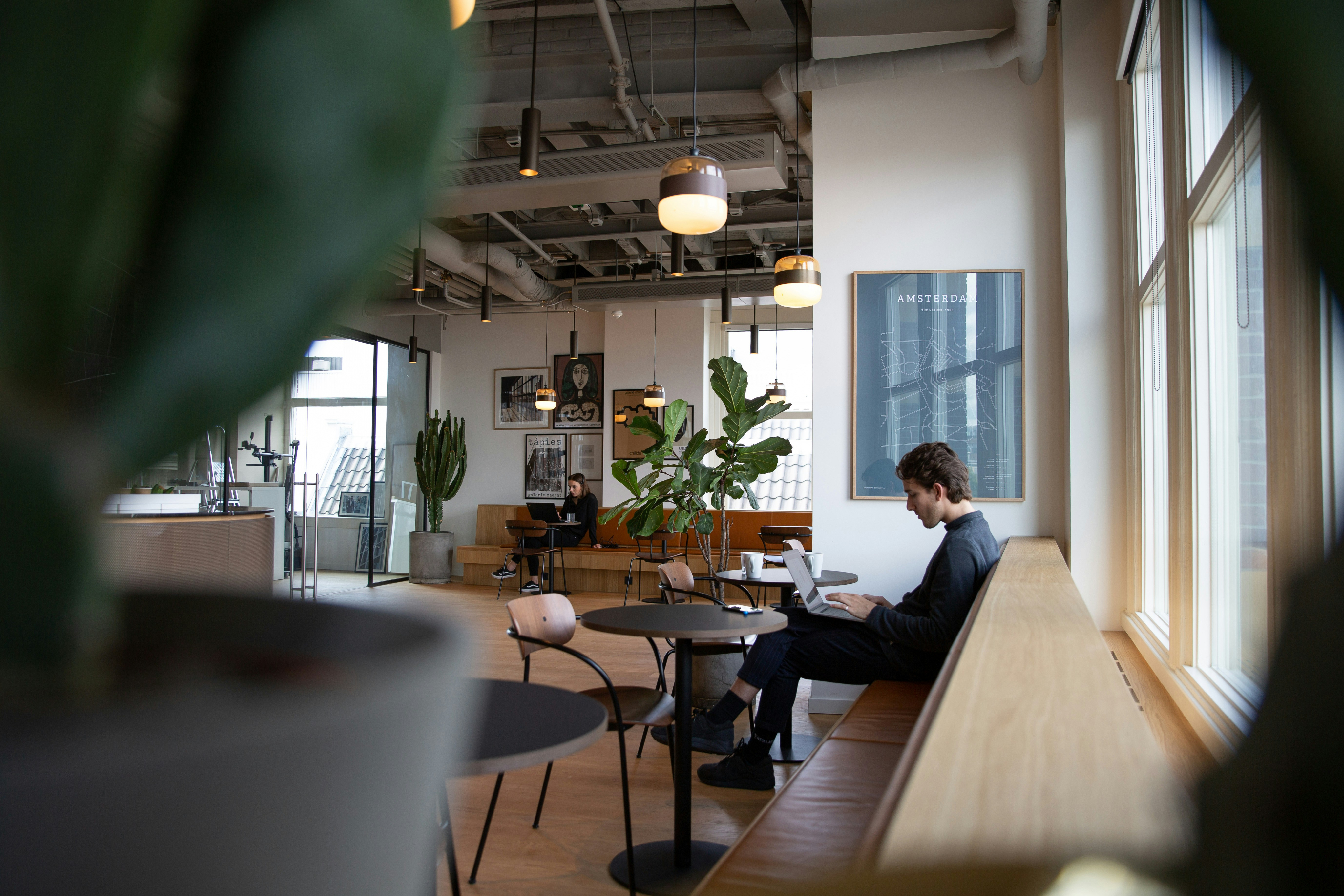
Who This Product Is For
People who work alone, without daily coworkers
Individuals who manage work end-to-end on their own
Those with flexible or constantly shifting work locations
People without a consistent peer group in similar roles
Long-term solo workers experiencing social disconnection
Learners who study or upskill alone after work and struggle to stay motivated

“There’s no way I can start working right after I wake up. I usually need one or two hours to scroll a bit, listen to music, and slowly get into the right headspace.”

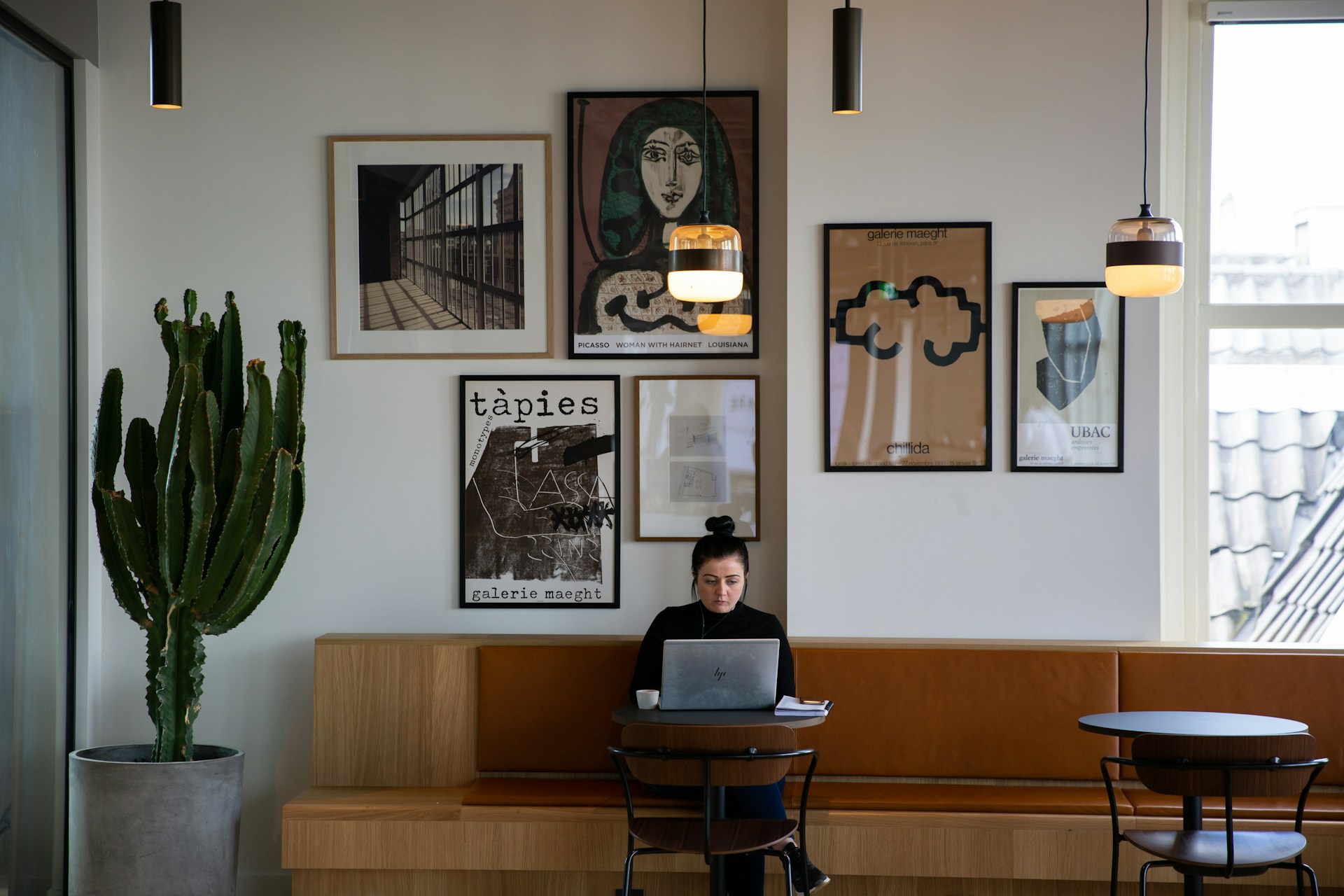
“I don’t really need to interact with people all the time, but chatting briefly with the café owner—or even conversations like this—makes me feel recharged.”
“When I get stuck, I can’t really explain what’s wrong. I end up distancing myself from work, even though I know it doesn’t actually solve the problem.”
from 3 remote workers
What User Talks about
Insights: Why Flexible Work Feels Harder Than It Shouldf Balance
Freedom removes the cues that once shaped the workday.
Rhythm
Presence
Rest
01
Focus needs a transition
Entering work takes time, not willpower.
02
Freedom creates uncertainty
Without structure, every decision adds mental load.
03
Presence matters more than interaction
Low-pressure presence reduces isolation.
04
Environment signals work mode
Place helps confirm when work begins.
Navigating Design Trade-offs
Exploration · Testing Ways of Working Together
In the early stage of Common Cafe, I explored different online coworking formats to understand how presence, focus, and rhythm function without physical coworkers.
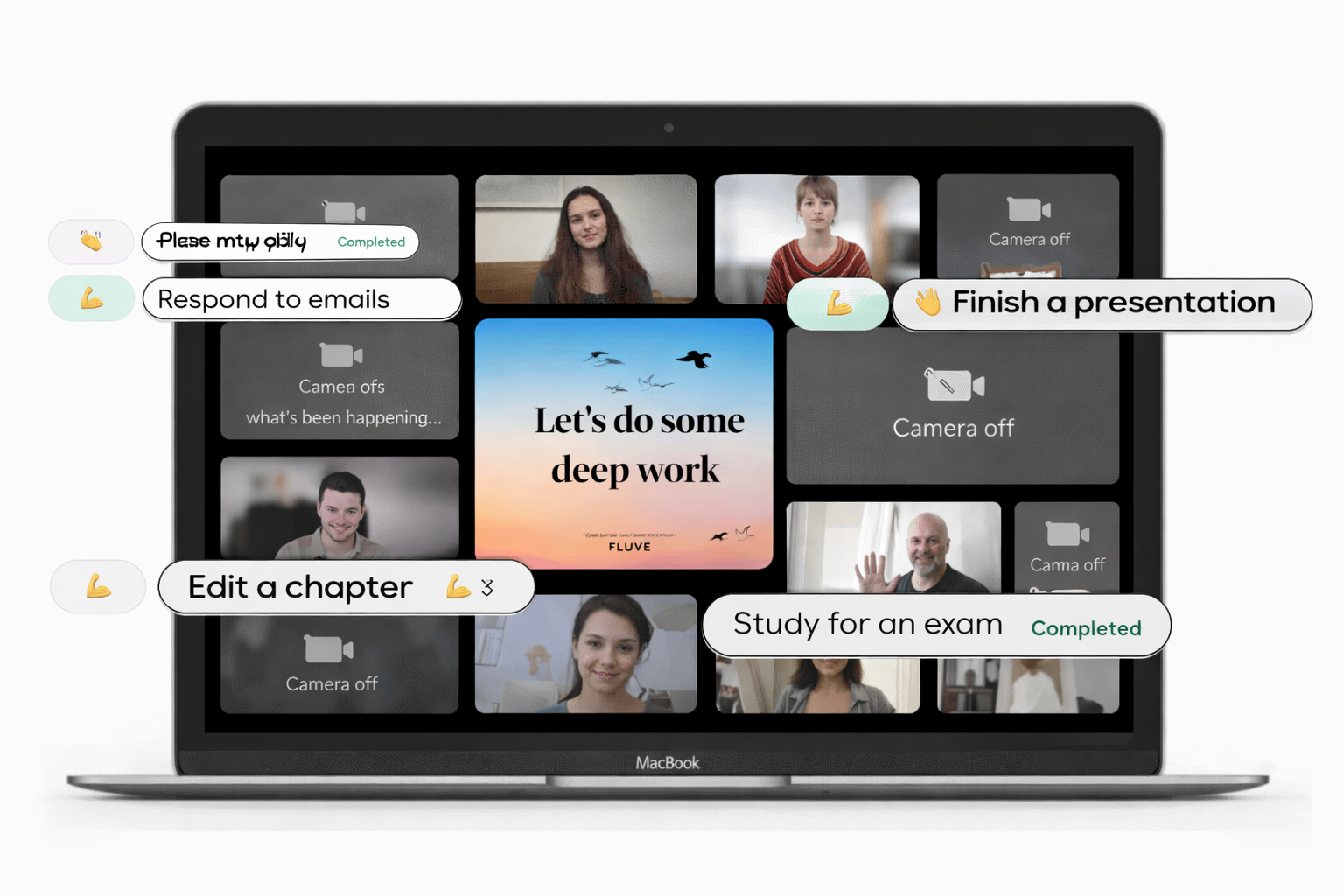
Library Mode · Presence without momentum
While the always-open, low-pressure presence felt gentle, motivation often failed to carry forward after sessions ended.
The sense of “working together” remained too light, revealing that presence alone wasn’t enough to sustain a workday rhythm.

Making conversation intentional, not ambient
Conversation should not exist as background noise—it needs to be intentional, clearly framed, and time-bound.
I deliberately separated the platform into two distinct spaces, allowing users to choose based on their current state:
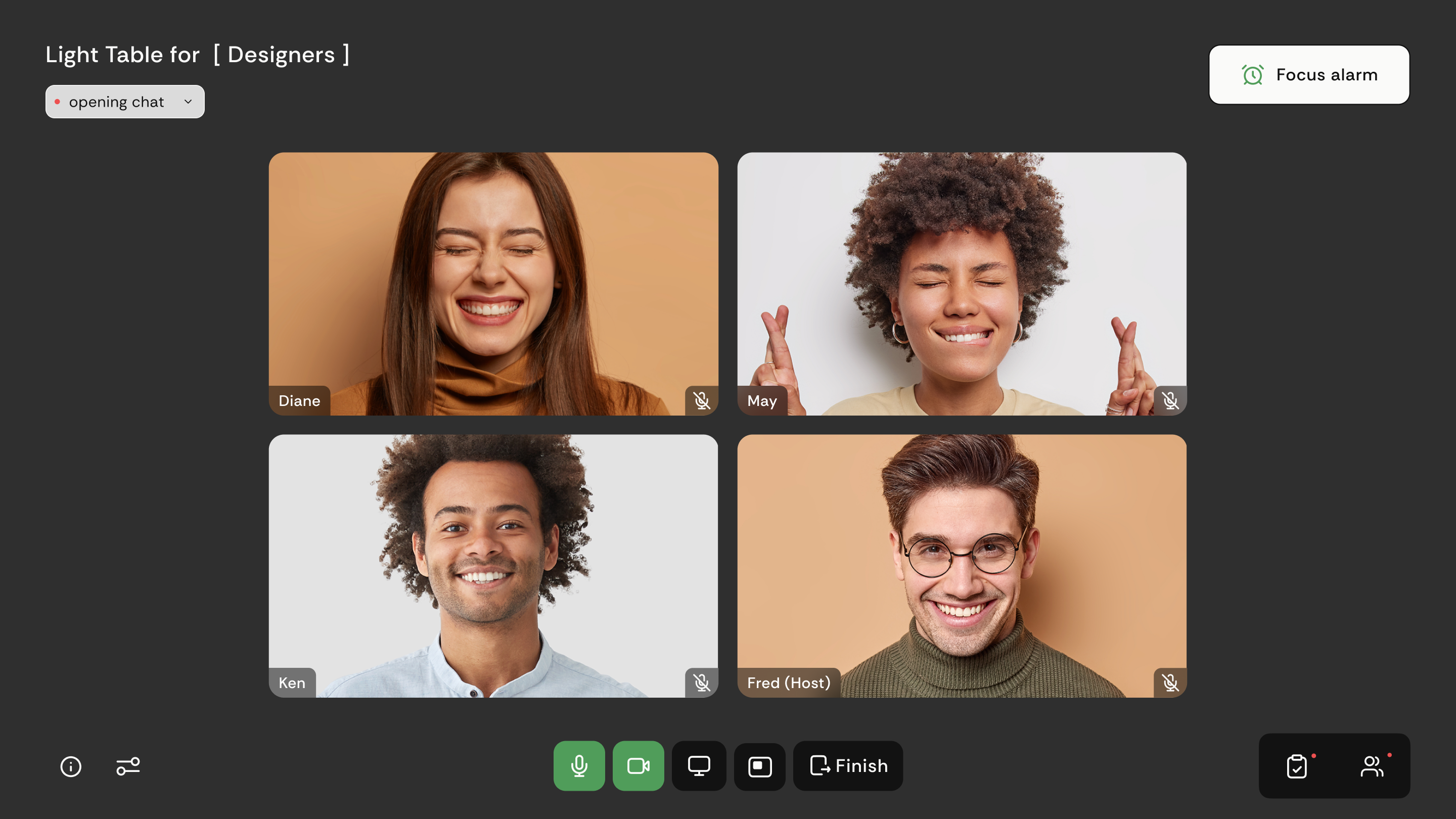
Light Table

A focus-first environment designed for longer sessions (approximately 4–6 hours).
Social interaction appears only at the opening and closing, preserving a continuous and stable working rhythm in between.

Light Table for freelancer
🌞 A focused table with warm company!

opening chat

focus

rest

wrap-up chat
13:00-18:00
Get ready

Camera & microphone required

Opening & wrap-up chat (30 min each)

3/4
( 4 People maximum )

Social Nook
A social-first environment designed for shorter sessions (around 2 hours).
Topic-based prompts help participants quickly establish shared ground and connect without forcing prolonged interaction.

Social nook for designer
📖 Sharing a Book You Love!!
opening chat
focus
rest
wrap-up chat
13:00-15:00
Booking
Camera & microphone required
5/8
( 8 People maximum )
Spots are available. You can book a seat in this session.

Social nook for all
🧘 Spend a Slow Monday
opening chat
focus
rest
wrap-up chat
18:00-20:00
Booked
Camera & microphone required
3/6
( 6 People maximum )
You’re booked. Join when the session starts.

Social nook for dog person
Dog People, Say Hi 🐶 🐶 🐶
opening chat
focus
rest
wrap-up chat
live

19:00-20:30
Enter

Camera & microphone required
4/5
( 5 People maximum )
This session is live. You can enter now.

Social nook for all
Talking About What’s Been Hard Lately
opening chat
focus
rest
wrap-up chat
22:00-23:00
Fully booked
Camera & microphone required
4/4
( 4 People maximum )
This session is full.
This separation ensures that focus and conversation support each other, rather than compete for attention.
Balancing Structure and Social Connection
Working with familiar people (online or offline)
Low Interaction
High Interaction
regular coffee shop
Low
Environmental
Structure
stay at home


Flown
The Singularity Work Café
co working
online
Colla Play
common cafe
High
Environmental
Structure
Research suggests that high-interaction environments without structure increase cognitive load, while highly structured, low-interaction settings can intensify feelings of isolation (Toscano & Zappalà, 2020).
Therefore, this project focuses on high structure × high interaction, preserving essential social connection within a clear, supportive rhythm.
co working online
Flown
common cafe
Product Focus
Online shared work format
Focus & productivity tool
Workday rhythm with gentle companionship
Session Length
1–3 hours per session
1-2 hours per session
4–6 hours per session
Interaction Depth
Medium
Low
Moderate, with clear boundaries
Source of Structure
Single host–led facilitation with clear focus and break periods
Each session managed by a dedicated professional facilitator
Professionally facilitated sessions with guided flow
Group Size
Recurring group, ~10–20 people
Variable group size, mostly unfamiliar participants
Multiple sessions, 4–8 people per session
Strengths
Ritualized, café-like work experience
High structure supports long-form focus
Small groups enable light social presence
Weaknesses
Long sessions raise entry barriers
Facilitation limits scalability
Opportunities
Growing demand for digital third spaces
Rising need for low-pressure companionship
Threats
Feature expansion by focus tools
Free alternatives reducing switching cost
A structured, social work rhythm—between tools and community.
The Solution,
Designing Workdays Around Rhythm, Not Output
How Common Cafe supports focus, rest, and closure through shared structure and low-interference presence.
For freelancers and remote workers, discipline is rarely the core problem.Most already know how to work.
The real challenge lies in sustaining a healthy rhythm—starting without resistance, resting without guilt, and ending the day with clarity.Common Cafe shifts the design focus away from productivity metrics and toward rhythm, recognizing that emotional stability—not efficiency—often determines whether independent work is sustainable over time.
From Insight to Implementation
01
Lower the barrier to starting work — together
Starting work is treated as a transition, not a command
Reframes “starting work” as joining a table
Opening chat allows warm-up and an unready state
Limiting group size for meaningful connection
Designed for small groups (3–5 people) by default
Enables a moderate level of social connection — neither too deep nor too superficial
02
Hold focus through low-interference presence
In Light Table sessions, focus is supported not by interaction, but by shared presence.With cameras on and minimal communication, users can sense others working alongside them while maintaining uninterrupted flow.
Work side by side without requiring conversation
Presence is conveyed through visuals and rhythm, not speech
Reduces social pressure while supporting sustained focus
03
Normalize rest through shared rhythm
Rather than treating rest as an individual choice, Common Cafe makes it a system- and group-supported moment.When focus and breaks are clearly structured and happen together, users are more willing to pause without guilt or anxiety about falling behind.
Full-screen, light-toned break states
Synchronized transitions for the whole group
Rest becomes permitted and collectively experienced
04
Create psychological closure at the end of work
For many independent workers, the challenge is not starting or focusing, but knowing when work is truly finished.Through a clear wrap-up chat and lightweight task completion, Common Cafe helps users mentally disengage and avoid lingering work residue.
Clear signals for ending a session
Reduces the blurred feeling of “still working”
From Principles to Interface
High-fidelity UI screens include:
Sign in
Login as a calm entry point into the platform.Designed to set the tone before any interaction begins, emphasizing ease, warmth, and a sense of shared presence rather than urgency.
State tags
State tags indicate the user’s current session readiness.They help communicate whether a user is ready, waiting, or already in session, reducing ambiguity in shared spaces.
Mini View
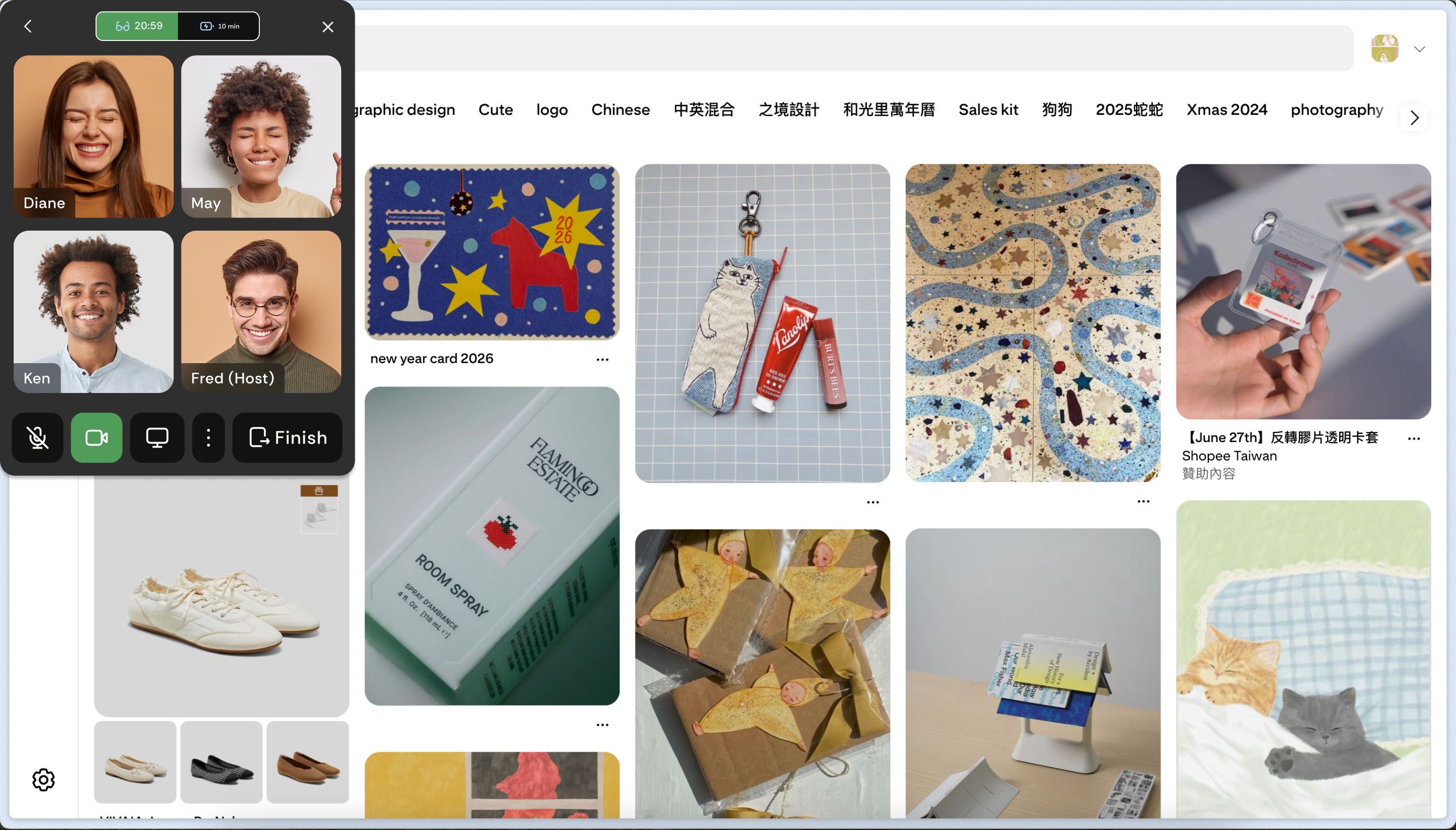
Mini View allows users to stay present while maintaining focus.The session can be docked into a compact layout, keeping visual connection without interrupting individual work.
Intention
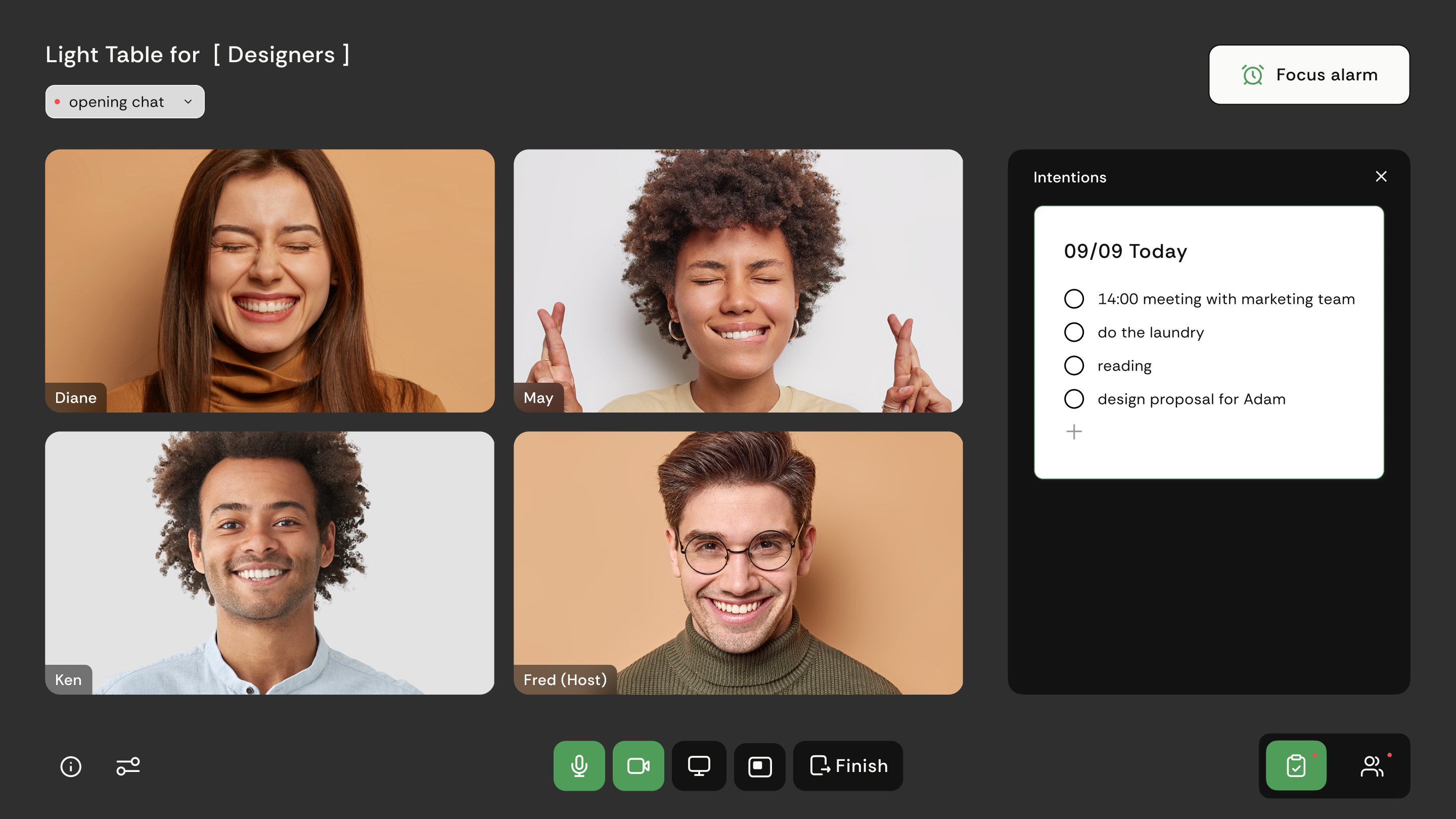
Intention helps users set a lightweight focus for each session.Instead of traditional task lists, it encourages users to name what they want to work on—available both on the platform and during live sessions.
Qualitative Validation (From Usability Testing)
This study focused primarily on Light Table as the core object of validation. Rather than evaluating productivity or output, the goal was to understand whether shared rhythm and low-interference companionship could meaningfully improve the psychological experience of working alone.
Four participants were invited to experience a complete end-to-end flow of the platform. Using Google Meet as prototype, all participants worked with their cameras on in a shared session. I facilitated the session as a host, guiding the overall rhythm to simulate a realistic Light Table gathering. Post-session interviews were conducted immediately afterward.
Through post-task interviews and behavioral observation, several consistent patterns emerged:

Starting felt easier
Users didn’t rush into work. Being allowed to warm up helped them ease into focus naturally.

Working together felt grounding
Seeing others quietly working made it easier to stay present without needing to interact.

Rest felt allowed
When everyone paused together, taking a break no longer felt like falling behind.

Ending felt complete
Clear endings helped users leave work behind instead of carrying it through the rest of the day.
Conclusion
The findings suggest that Common Cafe does not support work by optimizing efficiency,
but by stabilizing the emotional experience of working alone through shared rhythm and optional companionship.
By reducing psychological friction and mental drain,
the platform makes solo work more sustainable.

“The status tags are great—you don’t have to explain how you’re feeling, but others still understand your mental and work state.”

“Having almost an hour of conversation spread throughout the day felt just right. If there were a session like this tomorrow, I’d actually look forward to opening my laptop. It creates a ritual before work starts.”

“I didn’t expect to be more focused than when working alone without cameras on—but I really was.”
Choosing Rhythm Over Feature Completeness
Core question (MVP focus)
Can shared rhythm and low-pressure presence help people start, focus, rest, and end work more easily—without physical coworkers?
P1 — MVP
Light Table — focus-first, long-form sessions
Deep work (4–6 hours)
Social interaction only at opening & wrap-up
Clear break cues
Lightweight to-do list
P2 — Post-MVP
Social Nook — conversation-first sessions
Deeper engagement through recurring participation
Membership tiers & hosting tools
Out of scope (for MVP)
Delayed by design
Productivity scoring or output tracking
Heavy social features (DMs, followers)
Assumptions intentionally avoided
More interaction = better companionship
Focus must be measured or compared
Reflection & Next Steps
Key learnings
For freelancers and remote workers, the core challenge is not focus itself, but the lack of a rhythm that supports starting, sustaining, and ending a workday with ease.
The value of companionship lies not in frequent interaction, but in low-interference, optional presence—a way of feeling accompanied without added social pressure.
When rest is clearly signaled and experienced collectively, people are more willing to pause without guilt or fear of falling behind.
Smaller, stable group sizes (around 3–5 people) create stronger connection and long-term engagement while avoiding social overload.
Trade-offs & next steps
In the MVP stage, I intentionally avoided productivity scoring or output tracking to prevent premature comparison or performance anxiety.
Next, I plan to further explore how different host styles and session rhythms influence users’ sense of safety, comfort, and willingness to participate.
Future directions include experimenting with longer-term participation patterns, host progression paths, and lightweight personal reflection tied to work sessions.
Before expanding features, the core question remains central:Can shared rhythm and perceived companionship meaningfully reduce the psychological cost of working alone?
Back to home
Open to product design & UX opportunitiesmeetmix@gmail.com


© 2025 Pei Rong Penny Jiang
selected works
Musee
Common Café
visual works
GP Project 2050
Gong Xu Design
hello-penny.com
Common Café
An online shared workspace designed around rhythm, focus, and rest.
Low-pressure participation
Focus-first
Shared Pomodoro
0 → 1
human-centric
Common Cafe: An Online Shared Space for Focus and Gentle Accountability
A calm, time-structured coworking space where people focus together, rest on time, and reconnect between sessions.
Focus with others, without pressure
Built-in rhythm for focus and rest
Light social moments between sessions
Time
Aug 2025 → Jan 2026
Side project · 0 → 1Built and iterated based on real creative workflows
Role
Product Designer (UX Research · UI · Interaction)
Team
Solo designer
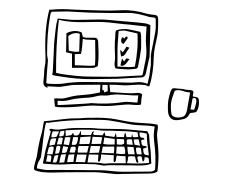
Beyond Productivity:
Designing Rhythm, Rest, and Presence
People who work from home often face:
Long hours of working alone, with limited social or environmental cues
Loss of external structure that once signaled when to start, pause, or stop
Blurred boundaries between work and rest, leading to cognitive fatigue
Increased reliance on personal willpower to self-regulate focus and breaks
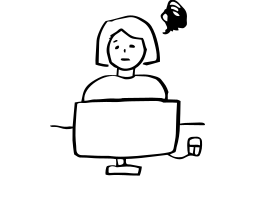
How might we
support people who work alone in feeling accompanied and
making steady progress throughout their workday?
Understanding the Friction Between Wanting to Work and Actually Working
User Type
Independent freelancers
Remote workers
Digital nomads
Solo founders
Full-time employees upskilling alone after work
Who This Product Is For
People who work alone, without daily coworkers
Individuals who manage work end-to-end on their own
Those with flexible or constantly shifting work locations
People without a consistent peer group in similar roles
Long-term solo workers experiencing social disconnection
Learners who study or upskill alone after work and struggle to stay motivated
“There’s no way I can start working right after I wake up. I usually need one or two hours to scroll a bit, listen to music, and slowly get into the right headspace.”
“I don’t really need to interact with people all the time, but chatting briefly with the café owner—or even conversations like this—makes me feel recharged.”
“When I get stuck, I can’t really explain what’s wrong. I end up distancing myself from work, even though I know it doesn’t actually solve the problem.”
from 3 remote workers
What User Talks about
Insights: Why Flexible Work Feels Harder Than It Shouldf Balance
Freedom removes the cues that once shaped the workday.
Rhythm
Presence
Rest
01
Focus needs a transition
Entering work takes time, not willpower.
02
Freedom creates uncertainty
Without structure, every decision adds mental load.
03
Presence matters more than interaction
Low-pressure presence reduces isolation.
04
Environment signals work mode
Place helps confirm when work begins.
Navigating Design Trade-offs
Exploration · Testing Ways of Working Together
In the early stage of Common Cafe, I explored different online coworking formats to understand how presence, focus, and rhythm function without physical coworkers.
Library Mode · Presence without momentum
While the always-open, low-pressure presence felt gentle, motivation often failed to carry forward after sessions ended.
The sense of “working together” remained too light, revealing that presence alone wasn’t enough to sustain a workday rhythm.

Making conversation intentional, not ambient
Conversation should not exist as background noise—it needs to be intentional, clearly framed, and time-bound.
I deliberately separated the platform into two distinct spaces, allowing users to choose based on their current state:
Light Table
A focus-first environment designed for longer sessions (approximately 4–6 hours).
Social interaction appears only at the opening and closing, preserving a continuous and stable working rhythm in between.
Light Table for freelancer
🌞 A focused table with warm company!

opening chat

focus

rest

wrap-up chat
13:00-18:00
Get ready
Camera & microphone required
Opening & wrap-up chat (30 min each)
3/4
( 4 People maximum )

Social Nook
A social-first environment designed for shorter sessions (around 2 hours).
Topic-based prompts help participants quickly establish shared ground and connect without forcing prolonged interaction.
Social nook for designer
📖 Sharing a Book You Love!!
opening chat
focus
rest
wrap-up chat
13:00-15:00
Booking
Camera & microphone required
5/8
( 8 People maximum )
Spots are available. You can book a seat in this session.
Social nook for all
🧘 Spend a Slow Monday
opening chat
focus
rest
wrap-up chat
18:00-20:00
Booked
Camera & microphone required
3/6
( 6 People maximum )
You’re booked. Join when the session starts.

Social nook for dog person
Dog People, Say Hi 🐶 🐶 🐶
opening chat
focus
rest
wrap-up chat
live

19:00-20:30
Enter

Camera & microphone required
4/5
( 5 People maximum )
This session is live. You can enter now.

Social nook for all
Talking About What’s Been Hard Lately
opening chat
focus
rest
wrap-up chat
22:00-23:00
Fully booked
Camera & microphone required
4/4
( 4 People maximum )
This session is full.
This separation ensures that focus and conversation support each other,
rather than compete for attention.
Balancing Structure and Social Connection
Research suggests that high-interaction environments without structure increase cognitive load, while highly structured, low-interaction settings can intensify feelings of isolation (Toscano & Zappalà, 2020).
Therefore, this project focuses on high structure × high interaction, preserving essential social connection within a clear, supportive rhythm.
Working with familiar people (online or offline)
Low Interaction
High Interaction
regular coffee shop
Low
Environmental
Structure
stay at home
Flown
The Singularity Work Café
co working
online
Colla Play
common cafe
High
Environmental
Structure
co working online
Flown
common cafe
Product Focus
Online shared work format
Focus & productivity tool
Workday rhythm with gentle companionship
Session Length
1–3 hours per session
1-2 hours per session
4–6 hours per session
Interaction Depth
Medium
Low
Moderate, with clear boundaries
Source of Structure
Single host–led facilitation with clear focus and break periods
Each session managed by a dedicated professional facilitator
Professionally facilitated sessions with guided flow
Group Size
Recurring group, ~10–20 people
Variable group size, mostly unfamiliar participants
Multiple sessions, 4–8 people per session
Strengths
Ritualized, café-like work experience
High structure supports long-form focus
Small groups enable light social presence
Weaknesses
Long sessions raise entry barriers
Facilitation limits scalability
Opportunities
Growing demand for digital third spaces
Rising need for low-pressure companionship
Threats
Feature expansion by focus tools
Free alternatives reducing switching cost
A structured, social work rhythm—between tools and community.
The Solution,
Designing Workdays Around Rhythm, Not Output
How Common Cafe supports focus, rest, and closure through shared structure and low-interference presence.
For freelancers and remote workers, discipline is rarely the core problem.Most already know how to work.
The real challenge lies in sustaining a healthy rhythm—starting without resistance, resting without guilt, and ending the day with clarity.Common Cafe shifts the design focus away from productivity metrics and toward rhythm, recognizing that emotional stability—not efficiency—often determines whether independent work is sustainable over time.
From Insight to Implementation
01
Lower the barrier to starting work — together
Starting work is treated as a transition, not a command
Reframes “starting work” as joining a table
Opening chat allows warm-up and an unready state
Limiting group size for meaningful connection
Designed for small groups (3–5 people) by default
Enables a moderate level of social connection — neither too deep nor too superficial
02
Hold focus through low-interference presence
In Light Table sessions, focus is supported not by interaction, but by shared presence.With cameras on and minimal communication, users can sense others working alongside them while maintaining uninterrupted flow.
Work side by side without requiring conversation
Presence is conveyed through visuals and rhythm, not speech
Reduces social pressure while supporting sustained focus
03
Normalize rest through shared rhythm
Rather than treating rest as an individual choice, Common Cafe makes it a system- and group-supported moment.When focus and breaks are clearly structured and happen together, users are more willing to pause without guilt or anxiety about falling behind.
Full-screen, light-toned break states
Synchronized transitions for the whole group
Rest becomes permitted and collectively experienced
04
Create psychological closure at the end of work
For many independent workers, the challenge is not starting or focusing, but knowing when work is truly finished.Through a clear wrap-up chat and lightweight task completion, Common Cafe helps users mentally disengage and avoid lingering work residue.
Clear signals for ending a session
Reduces the blurred feeling of “still working”
From Principles to Interface
High-fidelity UI screens include:
Sign in
Login as a calm entry point into the platform.Designed to set the tone before any interaction begins, emphasizing ease, warmth, and a sense of shared presence rather than urgency.
State tags
State tags indicate the user’s current session readiness.They help communicate whether a user is ready, waiting, or already in session, reducing ambiguity in shared spaces.
Mini View
Mini View allows users to stay present while maintaining focus.The session can be docked into a compact layout, keeping visual connection without interrupting individual work.
Intention
Intention helps users set a lightweight focus for each session.Instead of traditional task lists, it encourages users to name what they want to work on—available both on the platform and during live sessions.
Qualitative Validation (From Usability Testing)
This study focused primarily on Light Table as the core object of validation. Rather than evaluating productivity or output, the goal was to understand whether shared rhythm and low-interference companionship could meaningfully improve the psychological experience of working alone.
Four participants were invited to experience a complete end-to-end flow of the platform. Using Google Meet as prototype, all participants worked with their cameras on in a shared session. I facilitated the session as a host, guiding the overall rhythm to simulate a realistic Light Table gathering. Post-session interviews were conducted immediately afterward.
Through post-task interviews and behavioral observation, several consistent patterns emerged:
Starting felt easier
Users didn’t rush into work. Being allowed to warm up helped them ease into focus naturally.
Working together felt grounding
Seeing others quietly working made it easier to stay present without needing to interact.
Rest felt allowed
When everyone paused together, taking a break no longer felt like falling behind.

Ending felt complete
Clear endings helped users leave work behind instead of carrying it through the rest of the day.
Conclusion
The findings suggest that Common Cafe does not support work by optimizing efficiency,
but by stabilizing the emotional experience of working alone through shared rhythm and optional companionship.
By reducing psychological friction and mental drain,
the platform makes solo work more sustainable.
“The status tags are great—you don’t have to explain how you’re feeling, but others still understand your mental and work state.”
“Having almost an hour of conversation spread throughout the day felt just right. If there were a session like this tomorrow, I’d actually look forward to opening my laptop. It creates a ritual before work starts.”
“I didn’t expect to be more focused than when working alone without cameras on—but I really was.”
Choosing Rhythm Over Feature Completeness
Core question (MVP focus)
Can shared rhythm and low-pressure presence help people start, focus, rest, and end work more easily—without physical coworkers?
P1 — MVP
Light Table — focus-first, long-form sessions
Deep work (4–6 hours)
Social interaction only at opening & wrap-up
Clear break cues
Lightweight to-do list
P2 — Post-MVP
Social Nook — conversation-first sessions
Deeper engagement through recurring participation
Membership tiers & hosting tools
Out of scope (for MVP)
Delayed by design
Productivity scoring or output tracking
Heavy social features (DMs, followers)
Assumptions intentionally avoided
More interaction = better companionship
Focus must be measured or compared
Reflection & Next Steps
Key learnings
For freelancers and remote workers, the core challenge is not focus itself, but the lack of a rhythm that supports starting, sustaining, and ending a workday with ease.
The value of companionship lies not in frequent interaction, but in low-interference, optional presence—a way of feeling accompanied without added social pressure.
When rest is clearly signaled and experienced collectively, people are more willing to pause without guilt or fear of falling behind.
Smaller, stable group sizes (around 3–5 people) create stronger connection and long-term engagement while avoiding social overload.
Trade-offs & next steps
In the MVP stage, I intentionally avoided productivity scoring or output tracking to prevent premature comparison or performance anxiety.
Next, I plan to further explore how different host styles and session rhythms influence users’ sense of safety, comfort, and willingness to participate.
Future directions include experimenting with longer-term participation patterns, host progression paths, and lightweight personal reflection tied to work sessions.
Before expanding features, the core question remains central:Can shared rhythm and perceived companionship meaningfully reduce the psychological cost of working alone?
Back to home
Open to product design & UX opportunitiesmeetmix@gmail.com
© 2025 Pei Rong Penny Jiang
Selected works
Musee
Common Café
Visual Works
GP Project 2050
Gong Xu Design
hello-penny.com
Common Café
An online shared workspace designed around rhythm, focus, and rest.
Low-pressure participation
Focus-first
Shared Pomodoro
0 → 1
human-centric
Common Cafe: An Online Shared Space for Focus and Gentle Accountability
A calm, time-structured coworking space where people focus together, rest on time, and reconnect between sessions.


Focus with others, without pressure

Built-in rhythm for focus and rest
Light social moments between sessions
Time
Aug 2025 → Feb 2026
Side project · 0 → 1Built and iterated based on real creative workflows
Role
Product Designer (UX Research · UI · Interaction)
Team
Solo designer
Beyond Productivity:
Designing Rhythm, Rest, and Presence
People who work from home often face:
Long hours of working alone, with limited social or environmental cues
Loss of external structure that once signaled when to start, pause, or stop
Blurred boundaries between work and rest, leading to cognitive fatigue
Increased reliance on personal willpower to self-regulate focus and breaks


How might we
support people who work alone in feeling accompanied and
making steady progress throughout their workday?
Understanding the Friction Between Wanting to Work and Actually Working
User Type
Independent freelancers
Remote workers
Digital nomads
Solo founders
Full-time employees upskilling alone after work
Who This Product Is For
People who work alone, without daily coworkers
Individuals who manage work end-to-end on their own
Those with flexible or constantly shifting work locations
People without a consistent peer group in similar roles
Long-term solo workers experiencing social disconnection
Learners who study or upskill alone after work and struggle to stay motivated
“There’s no way I can start working right after I wake up. I usually need one or two hours to scroll a bit, listen to music, and slowly get into the right headspace.”
“I don’t really need to interact with people all the time, but chatting briefly with the café owner—or even conversations like this—makes me feel recharged.”
“When I get stuck, I can’t really explain what’s wrong. I end up distancing myself from work, even though I know it doesn’t actually solve the problem.”
from 3 remote workers
What User Talks about
Insights:
Why Flexible Work Feels Harder Than It Shouldf Balance
Freedom removes the cues that once shaped the workday.
Rhythm
Presence
Rest
01
Focus needs a transition
Entering work takes time, not willpower.
02
Freedom creates uncertainty
Without structure, every decision adds mental load.
03
Presence matters more than interaction
Low-pressure presence reduces isolation.
04
Environment signals work mode
Place helps confirm when work begins.
Navigating Design Trade-offs
Exploration · Testing Ways of Working Together
In the early stage of Common Cafe, I explored different online coworking formats to understand how presence, focus, and rhythm function without physical coworkers.
Library Mode · Presence without momentum
While the always-open, low-pressure presence felt gentle, motivation often failed to carry forward after sessions ended.
The sense of “working together” remained too light, revealing that presence alone wasn’t enough to sustain a workday rhythm.

Making conversation intentional, not ambient
Conversation should not exist as background noise—it needs to be intentional, clearly framed, and time-bound.
I deliberately separated the platform into two distinct spaces, allowing users to choose based on their current state:
Light Table
A focus-first environment designed for longer sessions (approximately 4–6 hours).
Social interaction appears only at the opening and closing, preserving a continuous and stable working rhythm in between.
Social Nook
A social-first environment designed for shorter sessions (around 2 hours).
Topic-based prompts help participants quickly establish shared ground and connect without forcing prolonged interaction.
Spots are available. You can book a seat in this session.
You’re booked. Join when the session starts.
This session is live. You can enter now.
This session is full.
This separation ensures that focus and conversation support each other, rather than compete for attention.
Balancing Structure and Social Connection
Research suggests that high-interaction environments without structure increase cognitive load, while highly structured, low-interaction settings can intensify feelings of isolation (Toscano & Zappalà, 2020).
Therefore, this project focuses on high structure × high interaction, preserving essential social connection within a clear, supportive rhythm.
Working with familiar people (online or offline)
Low Interaction
High Interaction
regular coffee shop
Low
Environmental
Structure
stay at home

Flown
The Singularity Work Café
co working
online
Colla Play
common cafe
High
Environmental
Structure
co working online
Flown
common cafe
Product Focus
Online shared work format
Focus & productivity tool
Workday rhythm with gentle companionship
Session Length
1–3 hours per session
1-2 hours per session
4–6 hours per session
Interaction Depth
Medium
Low
Moderate, with clear boundaries
Source of Structure
Single host–led facilitation with clear focus and break periods
Each session managed by a dedicated professional facilitator
Professionally facilitated sessions with guided flow
Group Size
Recurring group, ~10–20 people
Variable group size, mostly unfamiliar participants
Multiple sessions, 4–8 people per session
Strengths
Ritualized, café-like work experience
High structure supports long-form focus
Small groups enable light social presence
Weaknesses
Long sessions raise entry barriers
Facilitation limits scalability
Opportunities
Growing demand for digital third spaces
Rising need for low-pressure companionship
Threats
Feature expansion by focus tools
Free alternatives reducing switching cost
A structured, social work rhythm—between tools and community.
The Solution,
Designing Workdays Around Rhythm, Not Output
How Common Cafe supports focus, rest, and closure through shared structure and low-interference presence.
For freelancers and remote workers, discipline is rarely the core problem.Most already know how to work.
The real challenge lies in sustaining a healthy rhythm—starting without resistance, resting without guilt, and ending the day with clarity.Common Cafe shifts the design focus away from productivity metrics and toward rhythm, recognizing that emotional stability—not efficiency—often determines whether independent work is sustainable over time.
From Insight to Implementation
01
Lower the barrier to starting work — together
Starting work is treated as a transition, not a command
Reframes “starting work” as joining a table
Opening chat allows warm-up and an unready state
Limiting group size for meaningful connection
Designed for small groups (3–5 people) by default
Enables a moderate level of social connection — neither too deep nor too superficial
02
Hold focus through low-interference presence
In Light Table sessions, focus is supported not by interaction, but by shared presence.With cameras on and minimal communication, users can sense others working alongside them while maintaining uninterrupted flow.
Work side by side without requiring conversation
Presence is conveyed through visuals and rhythm, not speech
Reduces social pressure while supporting sustained focus
03
Normalize rest through shared rhythm
Rather than treating rest as an individual choice, Common Cafe makes it a system- and group-supported moment.When focus and breaks are clearly structured and happen together, users are more willing to pause without guilt or anxiety about falling behind.
Full-screen, light-toned break states
Synchronized transitions for the whole group
Rest becomes permitted and collectively experienced
04
Create psychological closure at the end of work
For many independent workers, the challenge is not starting or focusing, but knowing when work is truly finished.Through a clear wrap-up chat and lightweight task completion, Common Cafe helps users mentally disengage and avoid lingering work residue.
Clear signals for ending a session
Reduces the blurred feeling of “still working”
From Principles to Interface
High-fidelity UI screens include:
Sign in
Login as a calm entry point into the platform.Designed to set the tone before any interaction begins, emphasizing ease, warmth, and a sense of shared presence rather than urgency.
State tags
State tags indicate the user’s current session readiness.They help communicate whether a user is ready, waiting, or already in session, reducing ambiguity in shared spaces.
Mini View
Mini View allows users to stay present while maintaining focus.The session can be docked into a compact layout, keeping visual connection without interrupting individual work.
Intention
Intention helps users set a lightweight focus for each session.Instead of traditional task lists, it encourages users to name what they want to work on—available both on the platform and during live sessions.
Qualitative Validation (From Usability Testing)
This study focused primarily on Light Table as the core object of validation. Rather than evaluating productivity or output, the goal was to understand whether shared rhythm and low-interference companionship could meaningfully improve the psychological experience of working alone.
Four participants were invited to experience a complete end-to-end flow of the platform. Using Google Meet as prototype, all participants worked with their cameras on in a shared session. I facilitated the session as a host, guiding the overall rhythm to simulate a realistic Light Table gathering. Post-session interviews were conducted immediately afterward.
Through post-task interviews and behavioral observation, several consistent patterns emerged:

Starting felt easier
Users didn’t rush into work. Being allowed to warm up helped them ease into focus naturally.

Working together felt grounding
Seeing others quietly working made it easier to stay present without needing to interact.

Rest felt allowed
When everyone paused together, taking a break no longer felt like falling behind.

Ending felt complete
Clear endings helped users leave work behind instead of carrying it through the rest of the day.
Conclusion
The findings suggest that Common Cafe does not support work by optimizing efficiency,
but by stabilizing the emotional experience of working alone through shared rhythm and optional companionship.
By reducing psychological friction and mental drain, the platform makes solo work more sustainable.
“The status tags are great—you don’t have to explain how you’re feeling, but others still understand your mental and work state.”
“Having almost an hour of conversation spread throughout the day felt just right. If there were a session like this tomorrow, I’d actually look forward to opening my laptop. It creates a ritual before work starts.”
“I didn’t expect to be more focused than when working alone without cameras on—but I really was.”
Choosing Rhythm Over Feature Completeness
Core question (MVP focus)
Can shared rhythm and low-pressure presence help people start, focus, rest, and end work more easily—without physical coworkers?
P1 — MVP
Light Table — focus-first, long-form sessions
Deep work (4–6 hours)
Social interaction only at opening & wrap-up
Clear break cues
Lightweight to-do list
P2 — Post-MVP
Social Nook — conversation-first sessions
Deeper engagement through recurring participation
Membership tiers & hosting tools
Out of scope (for MVP)
Delayed by design
Productivity scoring or output tracking
Heavy social features (DMs, followers)
Assumptions intentionally avoided
More interaction = better companionship
Focus must be measured or compared
Reflection & Next Steps
Key learnings
For freelancers and remote workers, the core challenge is not focus itself, but the lack of a rhythm that supports starting, sustaining, and ending a workday with ease.
The value of companionship lies not in frequent interaction, but in low-interference, optional presence—a way of feeling accompanied without added social pressure.
When rest is clearly signaled and experienced collectively, people are more willing to pause without guilt or fear of falling behind.
Smaller, stable group sizes (around 3–5 people) create stronger connection and long-term engagement while avoiding social overload.
Trade-offs & next steps
In the MVP stage, I intentionally avoided productivity scoring or output tracking to prevent premature comparison or performance anxiety.
Next, I plan to further explore how different host styles and session rhythms influence users’ sense of safety, comfort, and willingness to participate.
Future directions include experimenting with longer-term participation patterns, host progression paths, and lightweight personal reflection tied to work sessions.
Before expanding features, the core question remains central:Can shared rhythm and perceived companionship meaningfully reduce the psychological cost of working alone?
Back to home
Open to product design & UX opportunitiesmeetmix@gmail.com
© 2025 Pei Rong Penny Jiang